
5 Signs Your Business Needs a Website Redesign
5 Signs Your Business Needs a Website Redesign

Kenisha Mary
Kenisha Mary
Co-Founder, Kayora Design Company
Co-Founder, Kayora Design Company
5 min
5 min
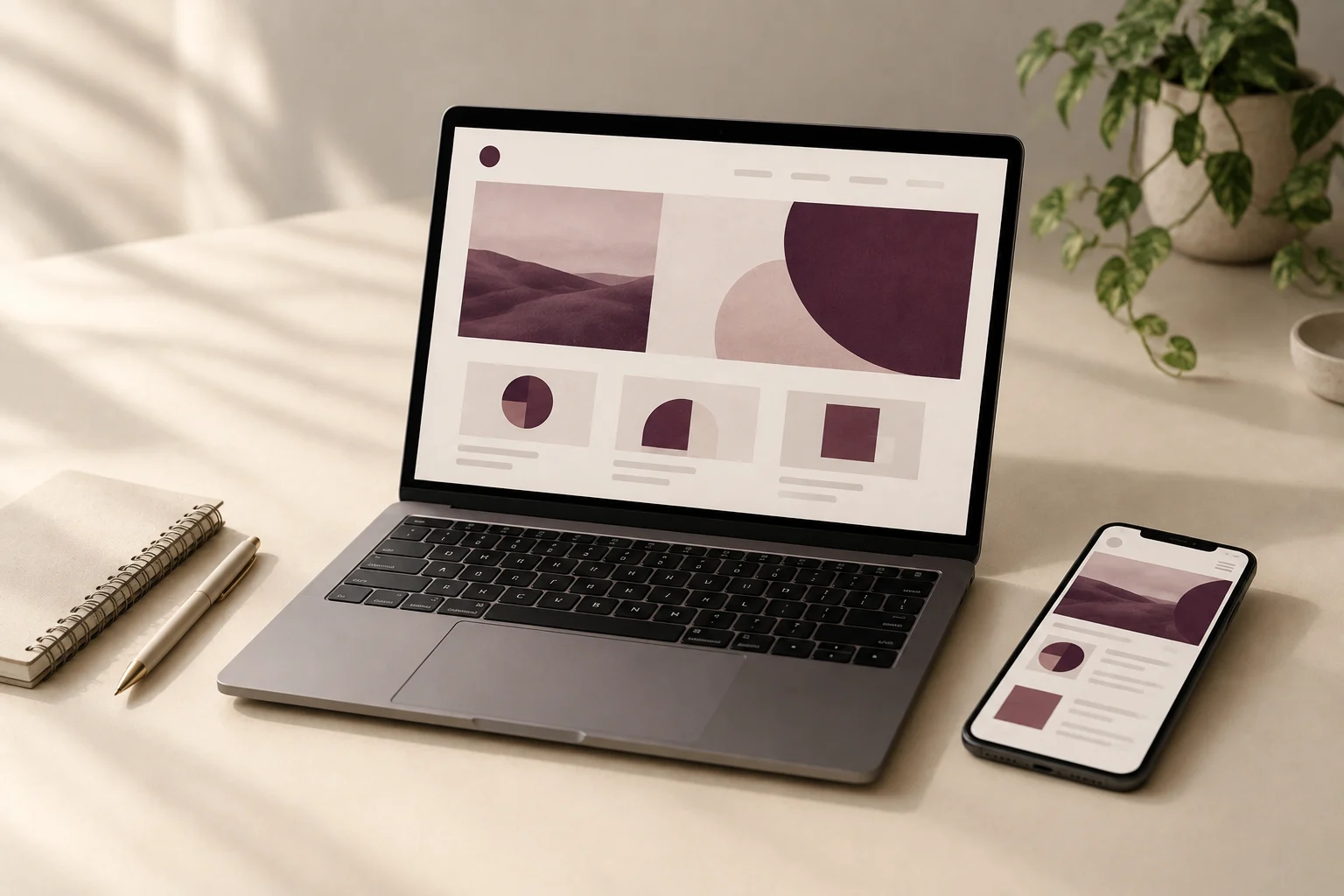
Most businesses do not redesign their website because someone decided it was time. They redesign because something broke, a deal was lost, or a competitor's site made theirs look tired by comparison.
A redesign is a real investment of money and attention, so it is worth knowing whether you actually need one. Sometimes the honest answer is no, and a few targeted fixes will do. Here are five signs that usually mean the site itself is the problem.
Your business has moved on and the site has not
This is the most common one and the easiest to miss, because it happens gradually.
You added a service. You dropped another. Your ideal client changed. You started working with larger businesses, or you narrowed to a niche. Meanwhile the website still describes the company you were two years ago.
The test is simple. Read your homepage as though you had never heard of your business. Does it describe what you sell today, to the people you actually want to sell it to? If you find yourself explaining what the site really means, that gap is costing you enquiries from people who never got in touch to ask.
2. You cannot change anything without asking someone else
If updating a phone number means emailing a developer and waiting three days, the site is working against you.
This shows up in predictable ways. Prices go stale because updating them is a hassle. A new service does not appear on the site for months. An old team member is still on the about page long after they left. None of these are urgent enough to chase, so they accumulate, and the site slowly stops reflecting reality.
Worse is when the person who built it becomes unreachable, or you do not have the files and logins. That is not a redesign trigger on its own, but it is a serious business risk. Whoever builds your next site should hand over full access and ownership on day one.
3. It is slow, or it falls apart on a phone
Most of the people finding an Abu Dhabi business on Google are doing it on a phone, often on mobile data, often while doing something else. A site that takes several seconds to load loses a good share of them before anything appears.
Check yours honestly. Open it on your phone on mobile data rather than office Wi-Fi. Watch how long the first thing takes to appear. Try filling in the contact form with one thumb. Tap the phone number and see whether it dials.
Slow and awkward on mobile is not a cosmetic problem. It is the majority of your traffic having a bad time.
The site no longer matches how the business presents itself
Plenty of businesses invest in new branding and then leave the website behind. New logo on the business card, old logo on the site. New colors in the deck, old colors online.
The result is a visible mismatch. A prospect who meets you, receives a proposal, then visits your website sees two different companies. It reads as disorganized even when nobody can say exactly why.
This is also why branding comes before web design rather than after. If a rebrand is on the horizon, do that first and build the site around it. We have written more on [why design systems matter before a rebrand].
Search cannot find you, and neither can anyone else
If your business does not appear when someone searches for what you do in Abu Dhabi, that is often structural rather than a content problem.
Common causes: the site is built on something search engines struggle to read, there are no separate pages for the services you actually offer, page titles are generic or missing, or the whole thing is one long page with no structure for search engines to work with.
These can sometimes be fixed without a full rebuild. But if the underlying structure is the issue, patching around it costs more over time than starting again properly.
A related but separate problem is a site that gets visitors and no enquiries. That is usually about how the page is written and laid out rather than the build itself, and we covered it in [why most business websites do not convert].
Refresh or rebuild
Not every problem on that list needs a full redesign. It is worth being clear about the difference before you commit.
A refresh updates copy, images, colors, and layout on the existing build. It suits a site that works technically and is broadly structured right, but looks dated or says the wrong things. Usually a couple of weeks.
A rebuild starts again with the structure, the platform, and the content. It suits a site that is slow, hard to
update, badly organized for search, or built on something nobody wants to maintain. Usually four to eight weeks depending on scope.
If you are unsure, the deciding question is whether the foundations are sound. Fresh paint on a cracked wall is still a cracked wall.
What a redesign should actually involve
A redesign that only changes how things look tends to produce the same problems again in a different color. A useful process covers:
What the site needs to achieve, in business terms rather than design terms
Who it is for and what they need to see before they get in touch
A structure that gives search engines something to work with
Content written for the people you want, not filler around a template
A build you can update yourself
Handover of every file, login, and account, in your name
That last point matters more than people expect. Ownership problems are one of the most common reasons businesses end up redesigning sooner than they planned. For more on this, see [what to look for before hiring a website design company in Abu Dhabi].
If you are not sure
You do not need all five signs. One clear one is usually enough to justify a conversation.
Tell us what your site is doing that frustrates you, and we will tell you honestly whether it needs a redesign or whether a few targeted fixes would get you there for less.
Most businesses do not redesign their website because someone decided it was time. They redesign because something broke, a deal was lost, or a competitor's site made theirs look tired by comparison.
A redesign is a real investment of money and attention, so it is worth knowing whether you actually need one. Sometimes the honest answer is no, and a few targeted fixes will do. Here are five signs that usually mean the site itself is the problem.
Your business has moved on and the site has not
This is the most common one and the easiest to miss, because it happens gradually.
You added a service. You dropped another. Your ideal client changed. You started working with larger businesses, or you narrowed to a niche. Meanwhile the website still describes the company you were two years ago.
The test is simple. Read your homepage as though you had never heard of your business. Does it describe what you sell today, to the people you actually want to sell it to? If you find yourself explaining what the site really means, that gap is costing you enquiries from people who never got in touch to ask.
2. You cannot change anything without asking someone else
If updating a phone number means emailing a developer and waiting three days, the site is working against you.
This shows up in predictable ways. Prices go stale because updating them is a hassle. A new service does not appear on the site for months. An old team member is still on the about page long after they left. None of these are urgent enough to chase, so they accumulate, and the site slowly stops reflecting reality.
Worse is when the person who built it becomes unreachable, or you do not have the files and logins. That is not a redesign trigger on its own, but it is a serious business risk. Whoever builds your next site should hand over full access and ownership on day one.
3. It is slow, or it falls apart on a phone
Most of the people finding an Abu Dhabi business on Google are doing it on a phone, often on mobile data, often while doing something else. A site that takes several seconds to load loses a good share of them before anything appears.
Check yours honestly. Open it on your phone on mobile data rather than office Wi-Fi. Watch how long the first thing takes to appear. Try filling in the contact form with one thumb. Tap the phone number and see whether it dials.
Slow and awkward on mobile is not a cosmetic problem. It is the majority of your traffic having a bad time.
The site no longer matches how the business presents itself
Plenty of businesses invest in new branding and then leave the website behind. New logo on the business card, old logo on the site. New colors in the deck, old colors online.
The result is a visible mismatch. A prospect who meets you, receives a proposal, then visits your website sees two different companies. It reads as disorganized even when nobody can say exactly why.
This is also why branding comes before web design rather than after. If a rebrand is on the horizon, do that first and build the site around it. We have written more on [why design systems matter before a rebrand].
Search cannot find you, and neither can anyone else
If your business does not appear when someone searches for what you do in Abu Dhabi, that is often structural rather than a content problem.
Common causes: the site is built on something search engines struggle to read, there are no separate pages for the services you actually offer, page titles are generic or missing, or the whole thing is one long page with no structure for search engines to work with.
These can sometimes be fixed without a full rebuild. But if the underlying structure is the issue, patching around it costs more over time than starting again properly.
A related but separate problem is a site that gets visitors and no enquiries. That is usually about how the page is written and laid out rather than the build itself, and we covered it in [why most business websites do not convert].
Refresh or rebuild
Not every problem on that list needs a full redesign. It is worth being clear about the difference before you commit.
A refresh updates copy, images, colors, and layout on the existing build. It suits a site that works technically and is broadly structured right, but looks dated or says the wrong things. Usually a couple of weeks.
A rebuild starts again with the structure, the platform, and the content. It suits a site that is slow, hard to
update, badly organized for search, or built on something nobody wants to maintain. Usually four to eight weeks depending on scope.
If you are unsure, the deciding question is whether the foundations are sound. Fresh paint on a cracked wall is still a cracked wall.
What a redesign should actually involve
A redesign that only changes how things look tends to produce the same problems again in a different color. A useful process covers:
What the site needs to achieve, in business terms rather than design terms
Who it is for and what they need to see before they get in touch
A structure that gives search engines something to work with
Content written for the people you want, not filler around a template
A build you can update yourself
Handover of every file, login, and account, in your name
That last point matters more than people expect. Ownership problems are one of the most common reasons businesses end up redesigning sooner than they planned. For more on this, see [what to look for before hiring a website design company in Abu Dhabi].
If you are not sure
You do not need all five signs. One clear one is usually enough to justify a conversation.
Tell us what your site is doing that frustrates you, and we will tell you honestly whether it needs a redesign or whether a few targeted fixes would get you there for less.
Have a project in mind?
Have a project in mind?
From branding to full websites, we handle it from first sketch to launch.
From branding to full websites, we handle it from first sketch to launch.
More Blogs
5 min read
5 min read
How Much Does Branding Cost in Abu Dhabi? What Businesses Should Expect
How Much Does Branding Cost in Abu Dhabi? What Businesses Should Expect

4 min read
4 min read
Website Design Company in Abu Dhabi: 8 Things to Look for Before You Hire
Website Design Company in Abu Dhabi: 8 Things to Look for Before You Hire

4 min read
4 min read
Why Your Pitch Deck Is Losing You Deals Before You Speak
Why Your Pitch Deck Is Losing You Deals Before You Speak
Services
Contact
kayoradesign@gmail.com
+971 54 581 5487 | 054 581 5486
Cubes Park, B-5, Musaffah, M25 Abu Dhabi, United Arab Emirates
Services
Contact
kayoradesign@gmail.com
+971 54 581 5487 | 054 581 5486
Cubes Park, B-5, Musaffah, M25 Abu Dhabi, United Arab Emirates